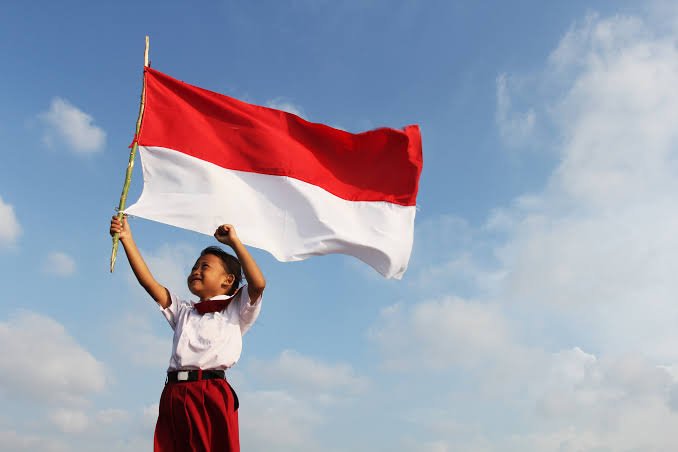
Eighty years ago, the nation's founders affirmed a noble mandate in the Preamble of the 1945 Constitution: to educate the nation's life. This mandate is more than just a moral ideal; it is a constitutional directive that forms the basis of all educational policies. After 80 years of independence, it is worth asking: how is our progress today?
Quantitatively, Indonesia's educational achievements are indeed significant. 2024 BPS data shows that the School Participation Rate (APS) for ages 7–12 and 13–15 is above 95%, indicating that access to basic education is almost universal. The government also allocates a minimum of 20% of the state budget (APBN) to education, funding programs such as BOS, the Smart Indonesia Card (KIP), and higher education subsidies.
In higher education, the Gross Enrollment Ratio (APK) increased to around 32% in 2024, indicating that more young people can access higher education compared to two decades ago, when it was only around 14%. A new curriculum has also been implemented to provide space for creativity, reduce teachers' administrative burdens, and encourage project-based learning.
Symbolically, Indonesia has become one of the countries with the largest educational ecosystems in the world: more than 52 million students, 3.3 million teachers, and hundreds of thousands of schools.
However, high numbers do not automatically mean high quality. The 2022 Programme for International Student Assessment (PISA) results placed Indonesia below the OECD average in literacy, mathematics, and science. In fact, more than half of students have not reached the minimum competency in numeracy.
Regional inequality is also striking. In urban areas, students find it relatively easy to access quality schools with certified teachers. In remote areas, the problems are layered: minimal infrastructure, non-ideal teacher-to-student ratios, limited facilities, and even children who have to travel long distances to get to school.
At the higher education level, the issue of graduate relevance to the world of work is in the spotlight. A 2023 BPS survey noted that the open unemployment rate for diploma and bachelor's degree graduates is still above 5%. This indicates a skills gap between what is taught on campus and what is needed by the industry.
The government has attempted various reforms: teacher training, adaptive curriculum development, digitalization of learning, and partnerships with the business world. However, implementation is often hampered by bureaucracy, limited regional budgets, and resistance to change in the field.
The fundamental problem is a policy orientation that often focuses on inputs (buildings, books, budget) and outputs (graduation rates, exams), but lacks focus on long-term outcomes, namely critical thinking skills, creativity, and the character of a complete citizen.
In addition, vocational education, which is expected to be a bridge to the world of work, still faces challenges regarding teacher quality, outdated equipment, and a lack of link and match with industry.
Building the nation's intelligence in the 21st century must mean preparing citizens to think critically, collaborate across cultures, adapt to new technologies, and possess moral integrity. To that end, several strategic steps need to be accelerated, for example: Strengthening teacher competence through continuous training, mentoring, and performance-based incentives. Curriculum relevance to the needs of the world of work, especially in the fields of technology, entrepreneurship, and 21st-century skills. As well as evaluation based on learning achievements rather than just exam scores, but indicators of thinking skills, creativity, and character.
Eight decades of the nation's journey show real progress, but also remind us that “educating the nation's life” is not a target that is ever finished. The world is changing fast, and education must adapt so that this nation is not left behind. The nation's intelligence must be reflected in its citizens who are skilled, moral, critical, and ready to compete on the global stage, not just present in the classroom.
Independence will be truly meaningful if every Indonesian child, from Sabang to Merauke, has the same opportunity to learn, grow, and contribute. That is the best answer to the mandate inherited 80 years ago.
*) The author is a lecturer at Stiekia, living in Bojonegoro.