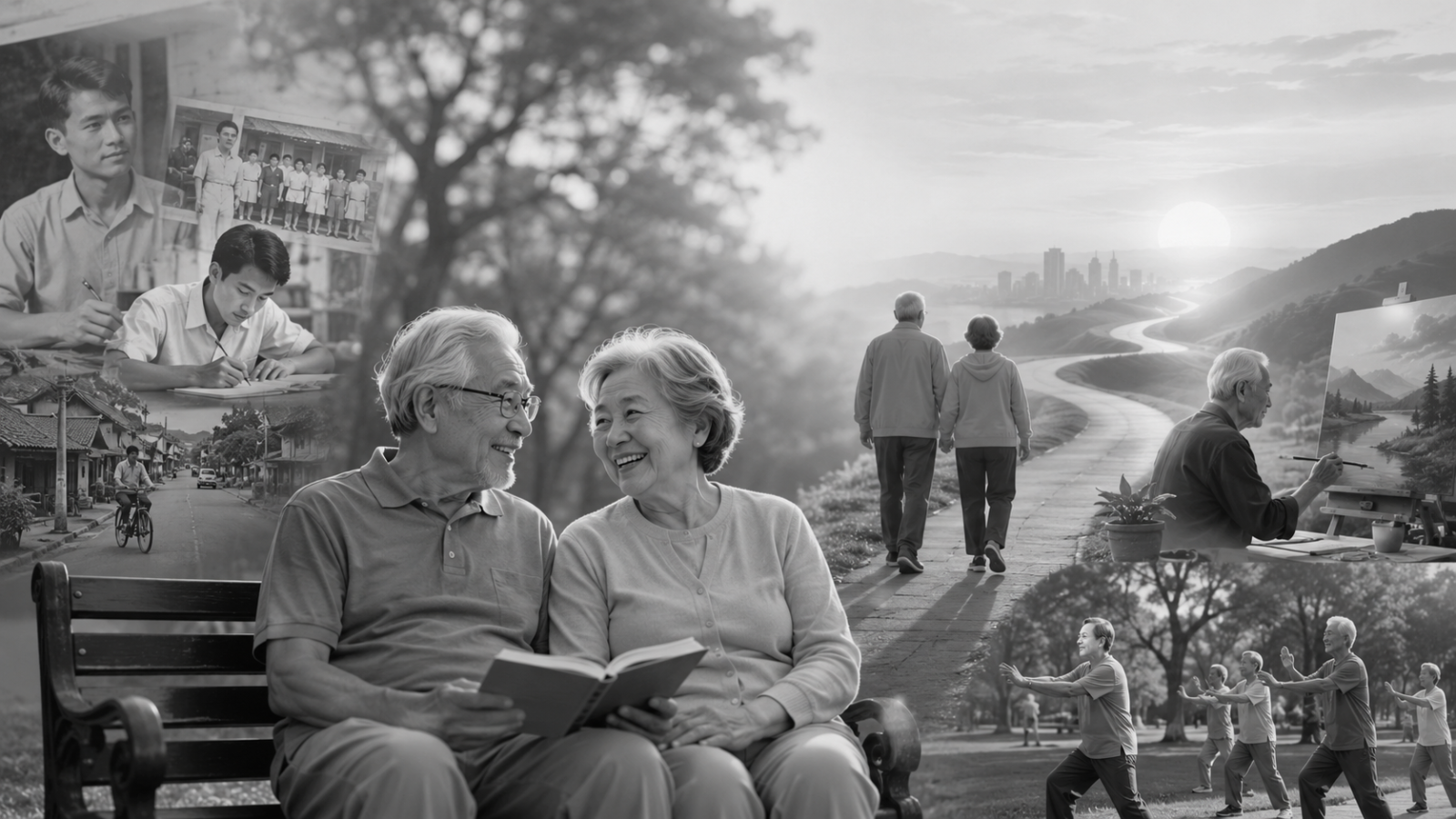
Getting old is a biological certainty. So, how do the elderly navigate the aging process? The elderly must also be prepared to face the "aging population" so they do not become a burden and remain productive.
Introduction
According to the KBBI (Indonesian Dictionary), 'Lansia' is an acronym for 'Lanjut Usia' (Advanced Age), which refers to the stage of old age in individual development or someone who is already old. Based on general references and laws related to social welfare, the category of elderly is generally assigned to individuals who have reached the age of 60 and above. Getting old is a biological certainty that no one can avoid, including the author, who is currently 68 years old. However, how we navigate the aging process depends heavily on the development of the times and technology, as well as cultural shifts.
Discussing the elderly of the past, present, and future is very important because the world's demographic structure is undergoing the largest shift in human history. Understanding this transition helps us prepare for the "aging population" so that they do not become a burden, but rather remain productive and an asset to the nation.
The following is a discussion on the development of the elderly across eras:
1. The Elderly of the Past viewed from Learning and Social Foundations
Past government policies in Indonesia positioned the elderly as important subjects of development through Law Number 13 of 1998 concerning the Welfare of the Elderly. This policy divided the elderly into two groups: potential elderly (still able to work/produce) and non-potential elderly (dependent on assistance).
The past government implemented the concept of life-long learning through an andragogical approach (adult education). Concrete steps included the Elderly Family Development Program (BKL), developed by BKKBN to educate families with elderly members regarding physical, mental, and emotional care patterns.
In the past, the elderly were viewed as centers of wisdom, guardians of tradition, and highly respected family leaders. Before mass-printed books or the internet, the elderly were the only "living libraries" for learning history through stories of honest people who ended up fortunate, customary laws regarding manners, and survival techniques with a simple lifestyle. They were spiritual and cultural bridges that passed on noble values to the younger generation. In the extended family system, the words of the elders or the head of the family were absolute decisions that could not be disputed.
In the past, the life expectancy of the elderly was still low due to limited health services, high rates of infectious diseases, poor sanitation, and inadequate nutrition; thus, the number of elderly was far smaller and not as advanced as it is now. Life Expectancy (AHH) was shorter; health problems were mostly handled traditionally. Elderly care relied entirely on the family (informal), not on state programs or nursing homes.
2. The Elderly of the Present: A Review of the Demographic Transition and Real Challenges
The decline in mortality and birth rates due to health and economic progress, along with longer life expectancy, has caused the number of elderly people to swell, resulting in an Aging Population. Currently, the world, including Indonesia, is entering an era where the percentage of the elderly population is increasing rapidly. Data from the Indonesian Central Statistics Agency shows that the proportion of the elderly population continues to rise, exceeding 11% of the total population.
The real challenge for the elderly today is that many do not have retirement savings (for private-sector workers), so they still have to work hard or depend on their families. The shift from an extended family structure to a nuclear family triggers the risk of loneliness or a lack of caregivers for the elderly. A nuclear family consists only of a husband, wife, and children, or the elderly no longer live under the same roof as their children and grandchildren. The house becomes quiet when children work and grandchildren go to school. Productive-age family members are generally busy working outside the home. The children of these elderly people must divide their focus between caring for their parents and supporting their own children. There are no other family members (such as uncles, aunts, or cousins) at home who can take turns looking after the elderly. Today's elderly face an increase in degenerative diseases (such as stroke, diabetes, and dementia) that require high medical costs.
Some elderly people want to live independently but are hindered by the lack of safe environmental infrastructure support. Therefore, concern for the elderly today is not only the government's responsibility by increasing elderly service facilities (Elderly Clinics, Nursing Homes, Elderly Parks), but religious organizations such as the Muhammadiyah association have established Elderly Schools in several regions, and the Muslimah Brotherhood (Salimah) also has an Elderly School; like schools in general, elderly schools also have curricula, classrooms, and so on. By participating in activities at these schools, the elderly socialize with fellow elderly people, thereby reducing feelings of loneliness.
Currently, the private sector also provides residential homes for the elderly or nursing homes, which are effective in reducing loneliness because they provide a peer community, structured daily activity schedules, and social support. In these places, the elderly can interact every day, share hobbies, and receive emotional attention that is often difficult to obtain if they live alone at home, but their numbers are still limited in big cities and they are expensive.
Besides that, to our knowledge, there are two foundations registered with the Bojonegoro Social Office that provide free homecare health assistance for the elderly, namely LKS-LU Sejubah and LKS-LU Akas Amanah Maboro. The assistance provided by LKS-LU is in accordance with its Vision: To lead the elderly to live healthy and dignified lives towards a good end (khusnul khotimah). And its Mission: To assist with elderly health; to assist with passive income for the elderly; and to assist with elderly worship.
3. The Elderly of the Future: Challenges of Independence
The elderly of the future face major challenges as life expectancy and the number of the elderly population increase; Indonesia is projected to have around 65.82 million elderly people by 2045. The independence of the elderly in the future will be heavily influenced by the development of digital technology, artificial intelligence (AI), companion robots, and smart homes, which will help the elderly live independently without burdening their children and grandchildren.
The development of digital technology helps the elderly live more independently through remote health access, fitness monitoring tools, and communication applications. These innovations reduce dependence on others, maintain mental health, and connect them with their families. In the future (such as the 2045 projection), the elderly will be dominated by a generation that is more tech-savvy, better educated, and demands financial independence and optimal health.
Digital technology cannot wait; the elderly population is increasing, and the need for fast, cheap, and easily accessible health services is becoming more urgent. This is the moment when digital health becomes a solution for the elderly to remain healthy, independent, and productive. The elderly have the right to technology that is inclusive, friendly, and supports their quality of life. With the right approach, digital health can be a friend to the elderly. In accordance with the WHO Vision in the Decade of Healthy Ageing 2021-2030, prioritizing the elderly is a future investment for all generations.
Smart home technology helps the elderly live independently and safely at home by relying on automation, motion sensors, voice control, and remote monitoring to prevent accidents and facilitate daily activities. Online doctor consultations without having to go to the hospital, smartwatches to check heart rate and blood pressure, and automatic alarms on mobile phones for daily medication schedules.
The elderly of the future demand a strong pension fund system and social security so that they do not fall into the abyss of poverty. Manage pension funds and investments from a young age to be financially independent. For LKS LU, prepare yourself, especially regarding the source of funds created for operational assistance, for example through Cash Waqf.
Changing the stigma of the elderly from "burden" to "potential" through elderly-friendly jobs and social activities; channeling skills, experience, or opening micro-scale businesses adapted to the physical capacity of the elderly.
Utilization of telemedicine, robotic health aids, and digital communities specifically for the elderly so they remain productive and connected globally. There is an urgent need for a social security system, age-friendly city architects (age-friendly cities), and the integration of the silver economy.
Moch. Suberi, Non-Permanent Lecturer at STIEKIA & Advisor to the Bojonegoro Elderly Assistance Foundation