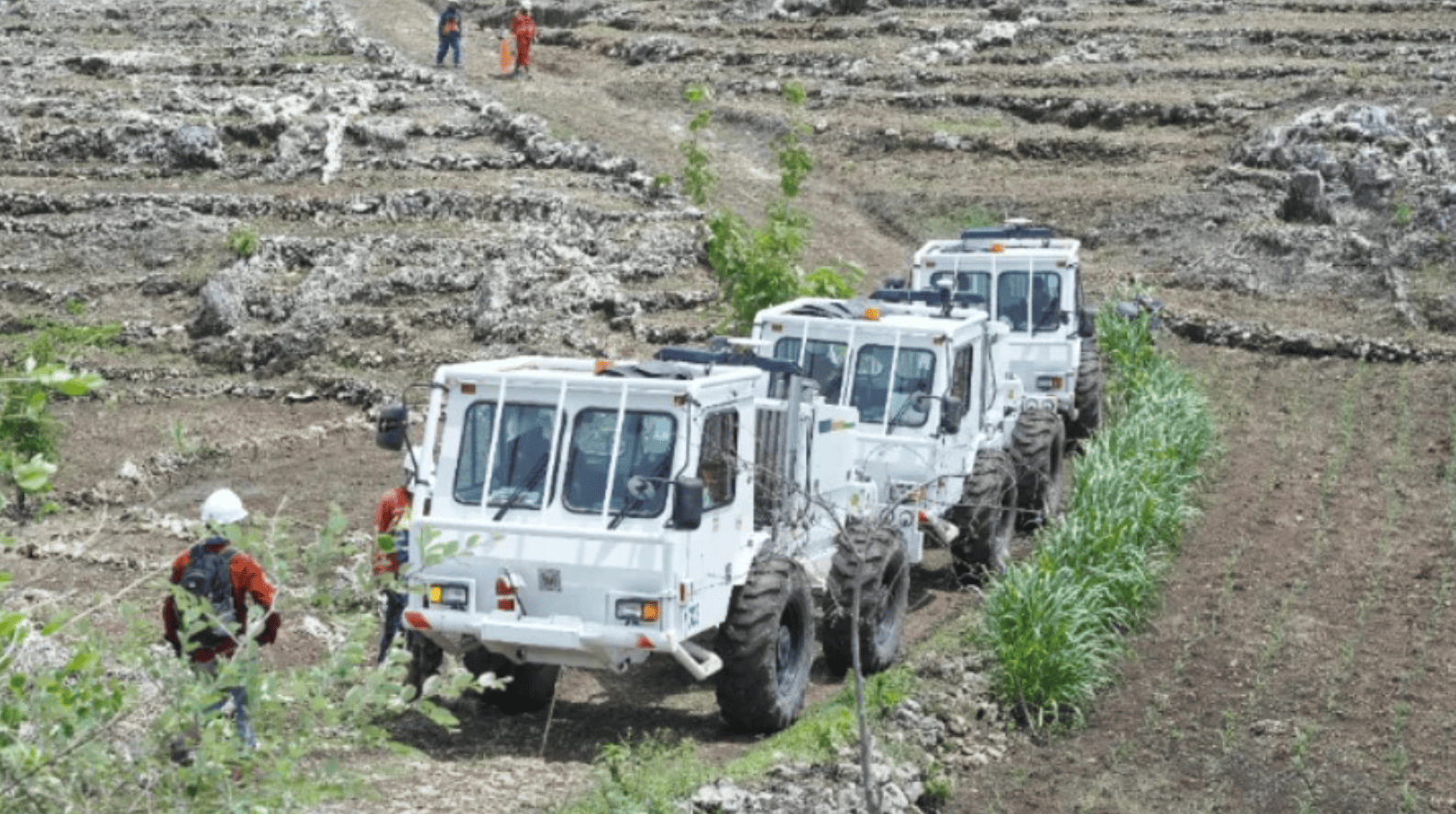
Bojonegoro is once again at a critical crossroads in its economic development journey. The planned 2D Lamturo Seismic Survey in several areas of Bojonegoro raises hopes for the discovery of new oil and gas reserves. However, behind this optimism lies a more fundamental question: will the discovery of new oil make Bojonegoro economically stronger, or will it make the region increasingly dependent on a resource that will eventually run out?
Bojonegoro is once again at a critical crossroads in its economic development journey. After years of being known as one of the important oil and gas producing regions in Indonesia, news of new exploration activities brings both hope and questions. The planned 2D Lamturo Seismic Survey, which covers several areas in Bojonegoro Regency, is part of an effort to determine the potential for subsurface oil and gas reserves. If this exploration results in the discovery of economically viable reserves that can then be produced, there is certainly an opportunity for new economic activity, increased regional revenue, job opportunities, and various other economic impacts. For a region that has had a long history with the oil and gas industry, the discovery of new reserves is certainly not something to be rejected. Oil and gas remain an important part of national energy needs, and exploration activities are part of efforts to maintain energy security. However, behind the optimism regarding the possibility of discovering new reserves, there is one question that I believe is far more important for the people of Bojonegoro to ask: will the discovery of new oil make Bojonegoro economically stronger, or will it make this region increasingly dependent on a resource that will inevitably diminish?
This question becomes even more relevant when we look at Bojonegoro's economic structure. Regional economic data shows that the mining and quarrying sector still makes a very large contribution to Bojonegoro's GRDP. In 2026, this sector still contributed about 42 percent of the GRDP, while at the same time, the mining sector experienced a contraction in line with the decline in oil and gas production. These figures show a paradox. On one hand, oil is a massive economic force for Bojonegoro. On the other hand, the magnitude of this contribution also indicates structural dependency. When oil and gas production increases, the economy gets a boost. When production declines, the economy feels the impact. In other words, the issue is not whether oil provides benefits or not. Clearly, oil provides benefits. The issue is whether those benefits have been successfully transformed into other sources of economic strength capable of surviving when oil production declines.
This is where we need to view Bojonegoro's development from a slightly different perspective. So far, discussions about natural resources have often been trapped in questions about how large the available reserves are, how much production can be generated, how much state and regional revenue can be obtained, and how much investment can come in. All these questions are important, but they are not enough. There is one dimension that is often forgotten, namely the question of what remains for the community when these resources begin to dwindle. Oil is a finite natural resource. It is not like human knowledge, which increases when used. It is also not like entrepreneurial ability, which can be passed down and developed across generations. When oil is extracted and sold, its reserves decrease. Therefore, the development of oil and gas producing regions should not stop at how to take advantage of oil, but must continue with how to transform this temporary wealth into more permanent wealth.
This is the perspective we can connect with the idea of Doughnut Economics introduced by British economist Kate Raworth. This idea essentially invites us to change how we understand economic success. The economy should not just pursue unlimited growth, because human life takes place on a planet with ecological limits. On one side, there is what is called the social foundation, which is the social foundation that must be met so that humans can live decently: education, health, food, income, work, justice, equality, participation, and various other basic needs. On the other side, there is the ecological ceiling, which is the ecological limit that must not be exceeded because the earth has limitations in providing resources and absorbing the impacts of human activity. Between these two boundaries lies the space that Raworth calls a safe and just space for humanity. With this perspective, development is no longer just about how much the economy grows, but about whether that growth is able to bring more people to a decent life without simultaneously damaging the environment that is the foundation of their lives.
If we use this perspective to look at Bojonegoro, then the existence of oil should not only be viewed as a source of revenue, but as a transition asset. Oil can be capital to build a more diverse, stronger, and more independent economy. In other words, oil should not be the final goal of Bojonegoro's development. Oil should be a bridge to an economic future that does not depend on oil. This is the fundamental difference between merely managing natural resources and managing regional wealth for the benefit of future generations. When oil generates revenue, the strategic question that should arise is not just how to spend it, but how to invest it to create new sources of income that remain alive when oil begins to dwindle.
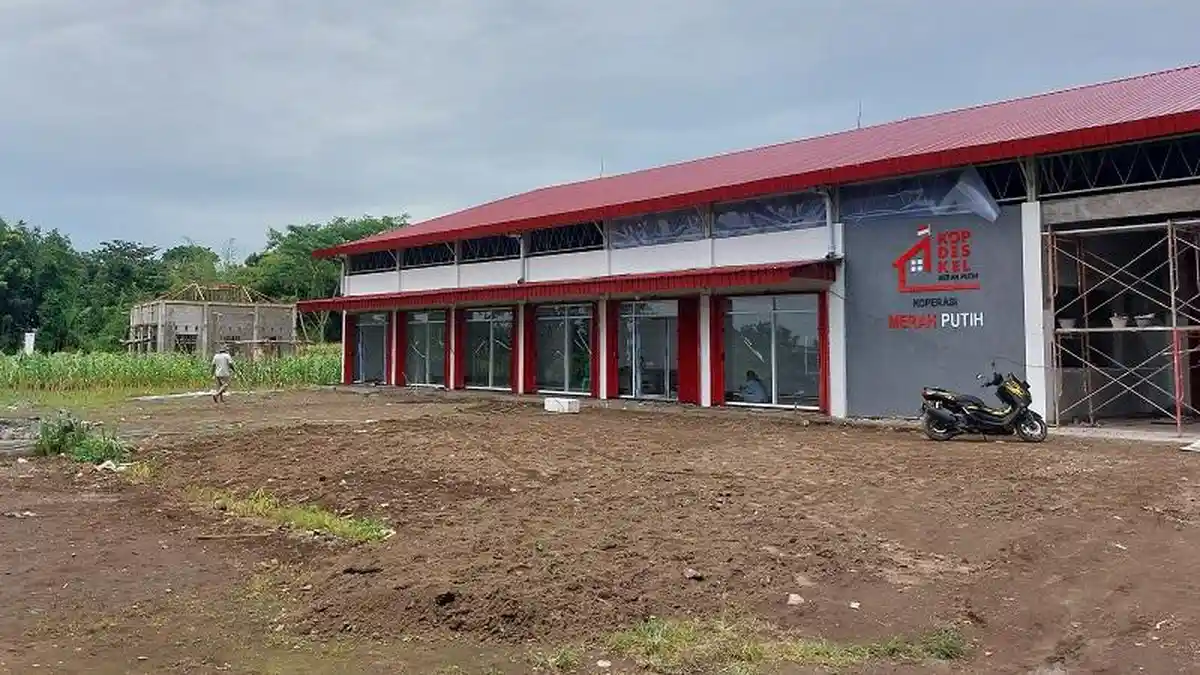
In this context, Bojonegoro actually has a huge opportunity because the region's wealth is not just under the surface of the ground. Bojonegoro also has wealth above the ground: villages, communities, agriculture, MSMEs, culture, tourism, human resources, communities, and various local economic institutions. So far, these various potentials have often been viewed as independent sectors. Farmers have their own market problems. MSMEs have their own capital and marketing problems. Village-owned enterprises (BUMDes) have their own governance problems. Cooperatives have their own institutional problems. Tourism villages have their own visitation and promotion problems. Yet, if all these potentials are seen as part of a village economic ecosystem, the possibility arises to create much greater economic value.
Imagine, for example, a village in Bojonegoro has a superior agricultural commodity. Farmers produce the product but do not have a strong bargaining position. MSMEs process the product but face limitations in raw materials and markets. Stalls and grocery stores become local markets, but they get goods from outside the region. BUMDes have capital and institutions, but have not been able to become a connector between economic actors. Cooperatives have members, but are not yet integrated with the village supply chain. In this condition, the economic value actually available in the village leaks out. Farmers sell raw materials, products are processed elsewhere, the community buys finished products from outside, while village economic institutions only get a small part of the entire value chain. Whereas, if the chain can be integrated, most of the economic value can circulate within the village area and create what can be called a local multiplier effect.
Therefore, one of the big post-oil agendas for Bojonegoro should not just be building more physical infrastructure, but building the economic capacity of the community. The construction of roads, buildings, public facilities, and infrastructure is indeed important. However, infrastructure will be much more meaningful if the community has the capacity to use it as part of productive economic activities. Education becomes important not only because it increases school participation rates, but because it is able to produce people who have competencies according to future economic needs. MSME training becomes important not just because the number of training participants increases, but because after the training, their businesses truly experience an increase in productivity and market access. BUMDes become important not because the village has a business entity, but because that business entity is able to create economic value and social benefits for the community.
This is where village economic institutions have a strategic position. BUMDes, cooperatives, community business groups, and various forms of local economic institutions should not only be understood as organizations that run business units. More than that, these institutions can become institutional infrastructure for the community economy. If the local government has fiscal resources from the oil and gas sector, some of that power can be directed to strengthen village economic institutions so that the community has the ability to create value themselves. Because, when the oil runs out, the government cannot continue to replace all lost sources of income with government spending. What must be available are communities and economic institutions capable of generating value independently.
The Doughnut Economics perspective also brings us to ecological issues. Extractive industries always have environmental dimensions that must be taken into account. Land, water, air, biodiversity, and environmental quality are part of the capital of life that is often not fully included in conventional economic calculations. When an economic activity generates billions of rupiah but leaves behind environmental damage that must be restored at a high cost in the future, then there is actually an economic cost that is being deferred. Therefore, the success of oil and gas exploration and production is not enough to be measured by the amount of investment and revenue. We also need to ask about the quality of environmental management, restoration responsibilities, protection of surrounding communities, and how extractive activities can run within acceptable ecological limits.
This becomes even more important because the people who live around the extraction area are the parties closest to the consequences of these activities. They get economic opportunities, but at the same time, they also face social and environmental risks. Therefore, the principle of justice in Doughnut Economics becomes relevant. Local communities should not just be spectators of the high-value economic activities taking place in their area. They must have the opportunity to enter the value chain. They must have access to jobs, businesses, education, skills improvement, markets, and the opportunity to be part of the economy that grows around oil and gas activities. Thus, the benefits of natural resource exploitation do not stop at government revenue figures or company profits, but also create an increase in the economic capacity of the local community.
From this perspective, new oil exploration in Bojonegoro can actually be viewed as a second chance to learn from the past. We do not need to view exploration as a threat to the economic diversification agenda. On the contrary, exploration can actually be a momentum to accelerate diversification. If new reserves are found, the region gets the opportunity to obtain additional economic resources. That opportunity must be used to strengthen sectors that do not depend on oil. If new reserves are not found or production is not as large as expected, the region must also already have an alternative economic foundation. In both conditions, the diversification strategy remains relevant.
The problem is that economic diversification is often discussed when the main sector is already experiencing problems. We only get busy looking for new sources of income when revenue starts to decline. We only think about MSMEs when formal job opportunities are increasingly limited. We only talk about the creative economy when the younger generation starts leaving the village. We only think about agriculture when the oil and gas sector experiences a slowdown. That way of thinking should be changed. Diversification must be done while oil is still producing. When revenue is still available, that is the best time to build a new economic foundation.
In this context, the concept of sovereign wealth or regional wealth funds is also interesting to discuss, although its implementation certainly requires deeper fiscal and regulatory studies. In principle, natural resource-producing regions can think that some of the benefits of non-renewable resources need to be converted into assets that are more durable. These assets can be in the form of human quality, education, technology, productive infrastructure, institutional capital, strengthening MSMEs, agricultural development, innovation, research, and local business ecosystems. In this way, some of the wealth taken from under the ground is transformed into productive wealth above the ground.
If this approach is applied seriously, we can imagine a major transformation in the way Bojonegoro views development. So far, we may have seen oil and gas as the center of the economy and the village as the recipient of development impacts. Moving forward, that relationship can be reversed. Oil and gas remain one of the sources of the economy, but the village becomes one of the centers of value creation. Revenue from oil and gas does not just circulate in government spending, but also enters the community's economic ecosystem. BUMDes and cooperatives do not just become implementers of village programs, but become professional economic institutions. MSMEs do not just become objects of empowerment, but become the main actors in the value chain. Farmers do not just become producers of raw materials, but become part of an agribusiness system that has market access. Young people do not just look for jobs outside the region, but have the opportunity to build businesses in their own region.
With this way of thinking, we can imagine Bojonegoro not only as an oil-producing region, but as a knowledge-producing, enterprise-producing, and community-producing region. The greatest wealth of the region is ultimately not just the oil that is under the ground, but the human ability to create value after that oil is no longer available. If the community has good education, relevant skills, strong institutions, integrated economic networks, and the ability to innovate, then the depletion of oil does not automatically mean the end of the region's economic future.
At this point, Doughnut Economics provides a very relevant message for Bojonegoro. We do not need to choose between economic growth and social welfare. We also do not have to choose between oil exploration and environmental protection in black-and-white terms. What is needed is a way to manage development so that economic activity can generate community welfare while remaining within ecological limits. Oil may be explored, but that exploration must be placed within a larger development agenda. Revenue may increase, but that revenue must generate new productive assets. Investment may come in, but local communities must have the opportunity to be part of the value chain. Production may be increased, but responsibility for the environment and future generations must not be reduced.
Ultimately, Bojonegoro's biggest problem is not whether there is still oil under the ground. The biggest problem is what we do while the oil is still there. If every oil and gas boom only results in increased consumption, then when oil declines, we will again face the same problems. But if the oil and gas boom is used to build people, strengthen villages, create healthy economic institutions, develop MSMEs, strengthen agriculture, build technology, improve education, and protect the environment, then oil can leave a legacy that is much longer than the life of its reserves.
Therefore, when exploration surveys are carried out and the community hopes to find new oil reserves, that hope is certainly valid. We may hope for new oil. We may hope for new investment. We may hope for new revenue. But at the same time, we must also have the courage to ask further: how much of that wealth will we invest to ensure that the generation of Bojonegoro after the oil era still has a decent life?
That question brings us back to the basic meaning of Doughnut Economics. Good development is not development that makes economic figures grow without limit. Good development is development that is able to ensure that the community is in a safe and just living space, while the environment remains able to support their lives. In the context of Bojonegoro, this means ensuring that oil and gas wealth does not just generate money today, but also generates economic, social, and ecological capacity for the future.
Perhaps that is why the measure of Bojonegoro's success as an oil-producing region should not only be determined by how much oil production is successfully extracted from the earth. The measure of its success can actually be seen from a simpler yet heavier question: when one day Bojonegoro's oil is truly gone, will the people of Bojonegoro still have a strong source of life?
If the answer is yes, then we have not just succeeded in managing oil.
We have succeeded in transforming underground wealth into prosperity above the ground.
And if that happens, then oil is not the end of the story of Bojonegoro's development.
Oil is just one chapter in the journey toward a more independent, inclusive, and sustainable Bojonegoro economy.